


The roaring twenties are calling, and luxury interiors are answering with open arms. Art Deco is experiencing a magnificent renaissance in 2025, emerging as the perfect antidote to years of quiet minimalism. This isn't just another fleeting design trend: it's a bold statement of optimism, glamour, and sophisticated rebellion against the ordinary.
You're witnessing something extraordinary: a design movement that originally celebrated post-war prosperity is now channeling our collective desire for elegance and structured beauty. But here's what makes this revival truly special: you don't need to transform your home into a 1920s museum piece. Instead, you can masterfully blend Art Deco's most compelling elements with contemporary luxury to create spaces that feel both timeless and thoroughly modern.
Why Art Deco Speaks to Today's Luxury Seekers
Art Deco's comeback isn't accidental. After years of stripped-down aesthetics, you're craving spaces with personality, drama, and unapologetic glamour. This movement celebrates craftsmanship, geometric precision, and the kind of confident luxury that makes a statement without saying a word—exactly how you want your luxury furniture to perform every day.
The beauty lies in its versatility. Whether you're furnishing a downtown penthouse or a suburban sanctuary, Art Deco elements can elevate your space with sophisticated flair. You're not just decorating: you're curating an experience that reflects your appreciation for both heritage and innovation—and you can do it with high-end home decor choices that feel considered, not complicated.
At Nahla Madison Home, we help you layer designer furniture with custom furniture that fits your architecture, your lifestyle, and your point of view, so every room looks collected, comfortable, and unmistakably yours.
Master the Art of Geometric Elegance
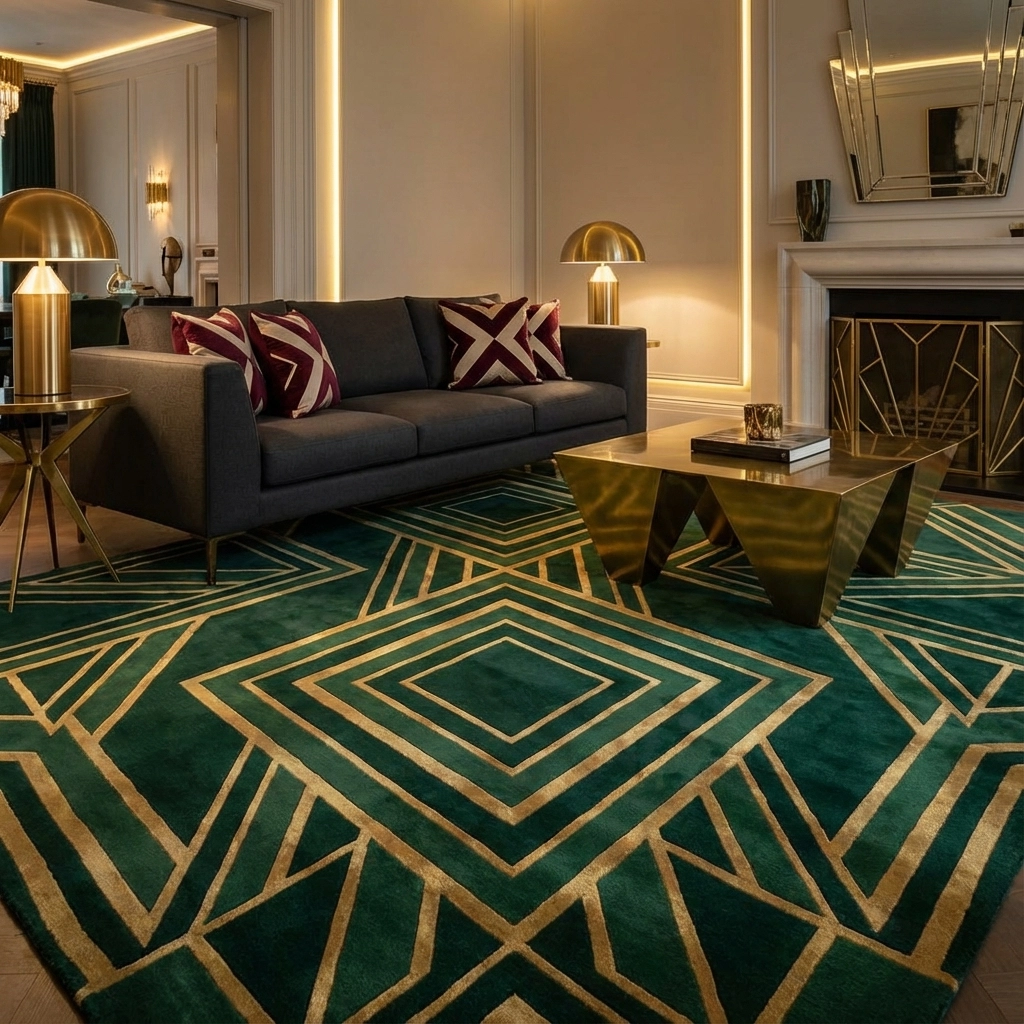
Your journey into Art Deco luxury begins with geometric patterns and forms. Think stepped details, faceted surfaces, and streamlined curves that create visual rhythm throughout your space. You can introduce these elements subtly through patterned textiles, diamond-shaped area rugs, or bold striped arrangements in your soft furnishings.
The key is balance. Rather than overwhelming your room with aggressive geometry, let these patterns breathe. A single statement piece: perhaps a custom console table with angular lines or a geometric light fixture: can anchor your entire design scheme. Remember, Art Deco thrives on symmetry and repetition, so consider how patterns echo and complement each other across your space.
Embrace the Power of Metallic Accents
Nothing captures Art Deco's machine-age glamour quite like the strategic use of metallic finishes. Chrome and nickel hardware have become the movement's signature elements, but in 2025, nickel is claiming the spotlight for its warmth and sophisticated patina potential.
You can incorporate these metals through cabinet hardware, lighting fixtures, or decorative accessories. Consider a statement mirror with a polished metal frame, side tables with sleek metallic legs, or brass and marble coffee tables that marry glow and gravitas. Pro tip: mix finishes with intention—let one metal lead and repeat it in at least three places for cohesion, then layer a secondary finish as an accent. Seal marble tops and use soft coasters to protect that luxe polish.
Create Drama with High-Contrast Color Palettes
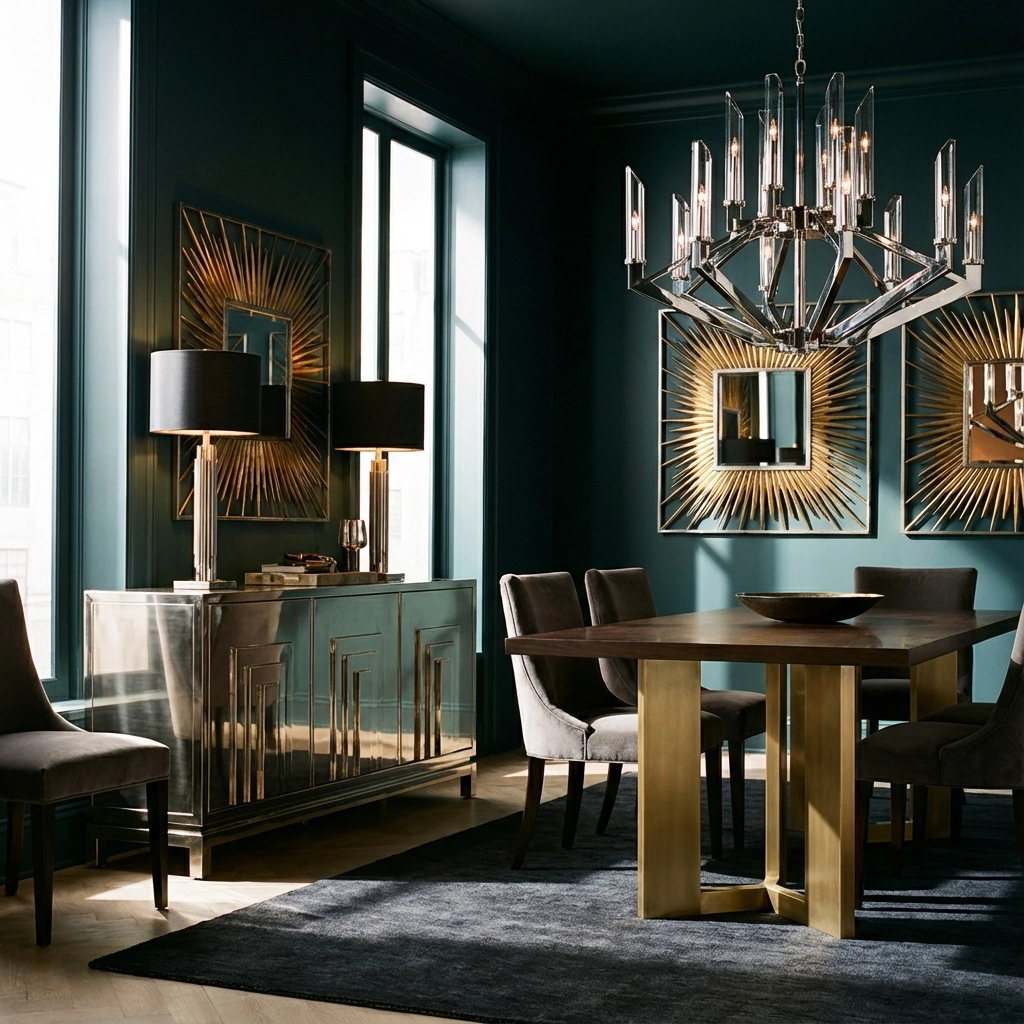
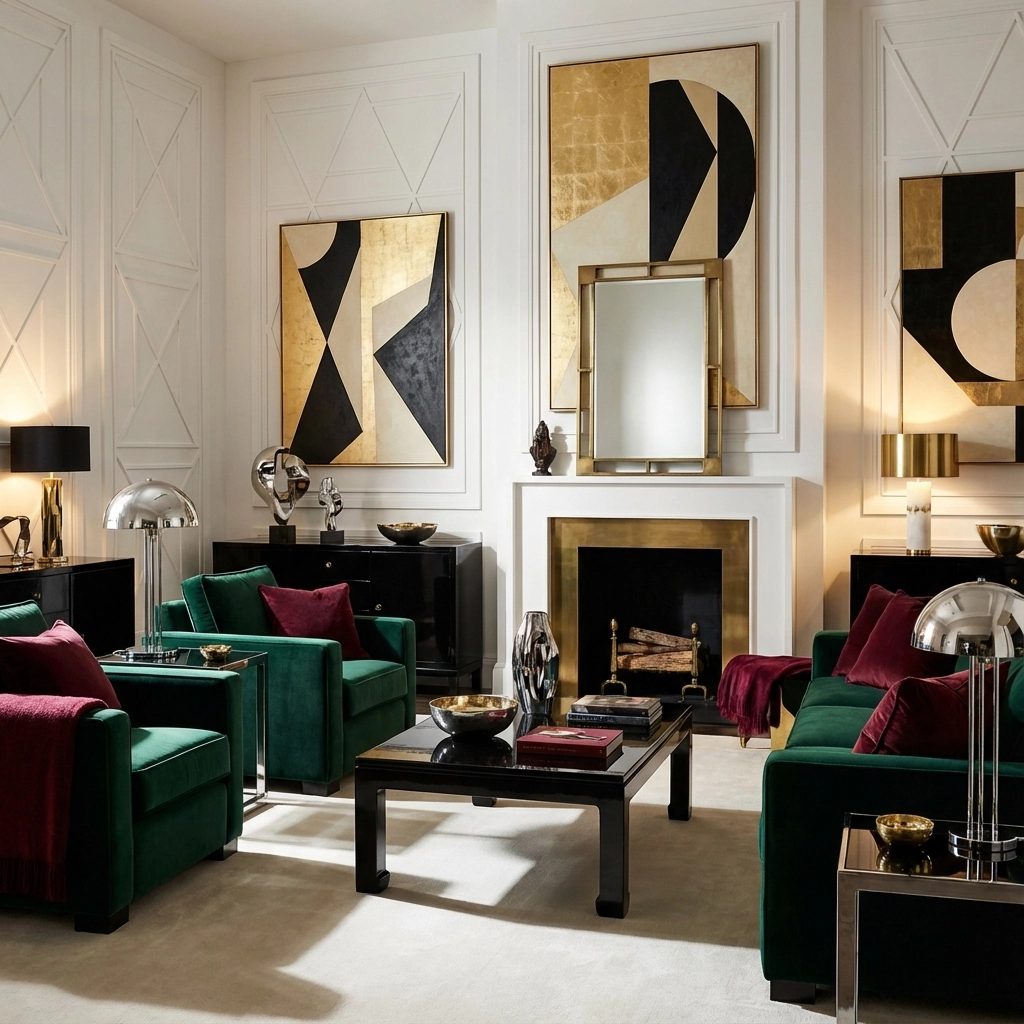
Art Deco's most compelling characteristic is its fearless approach to color contrast. Deep jewel tones paired with stark black and white combinations create the kind of visual drama that transforms ordinary rooms into extraordinary experiences. You might choose rich emerald greens against cream walls, or bold burgundy accents paired with charcoal furnishings. Anchor the palette with a black sideboard; it grounds the room, makes artwork pop, and gives your brass accents dimension.
Don't shy away from earthy sophistication either. Chocolate browns, deep reds, and muted greys create a more contemporary interpretation of the classic palette. The secret is commitment: choose your colors with confidence and let them make the statement they deserve to make. Styling formula: black sideboard + sculptural lamp pair + oversized round mirror (30–36 inches) + a trio of textural objects = instant gallery-level presence.
Invest in Luxurious Materials and Finishes
The tactile experience of your furniture matters immensely in Art Deco-inspired spaces. Dark wood finishes, particularly those with lacquered surfaces, evoke the period's appreciation for craftsmanship while feeling thoroughly modern. These rich finishes provide the perfect backdrop for both vintage-inspired pieces and contemporary sculptural furniture. This is the sweet spot for designer furniture and custom furniture—bespoke veneers, tailored dimensions, and artisan hardware that feel like they were made just for you.
You're not just selecting furniture: you're choosing materials that age beautifully and develop character over time. High-gloss finishes, mirrored surfaces, and polished woods create layers of visual interest that reward closer inspection. Prefer a softer sheen? Choose satin lacquer to keep the drama while easing reflections.
Transform Your Space from the Ground Up
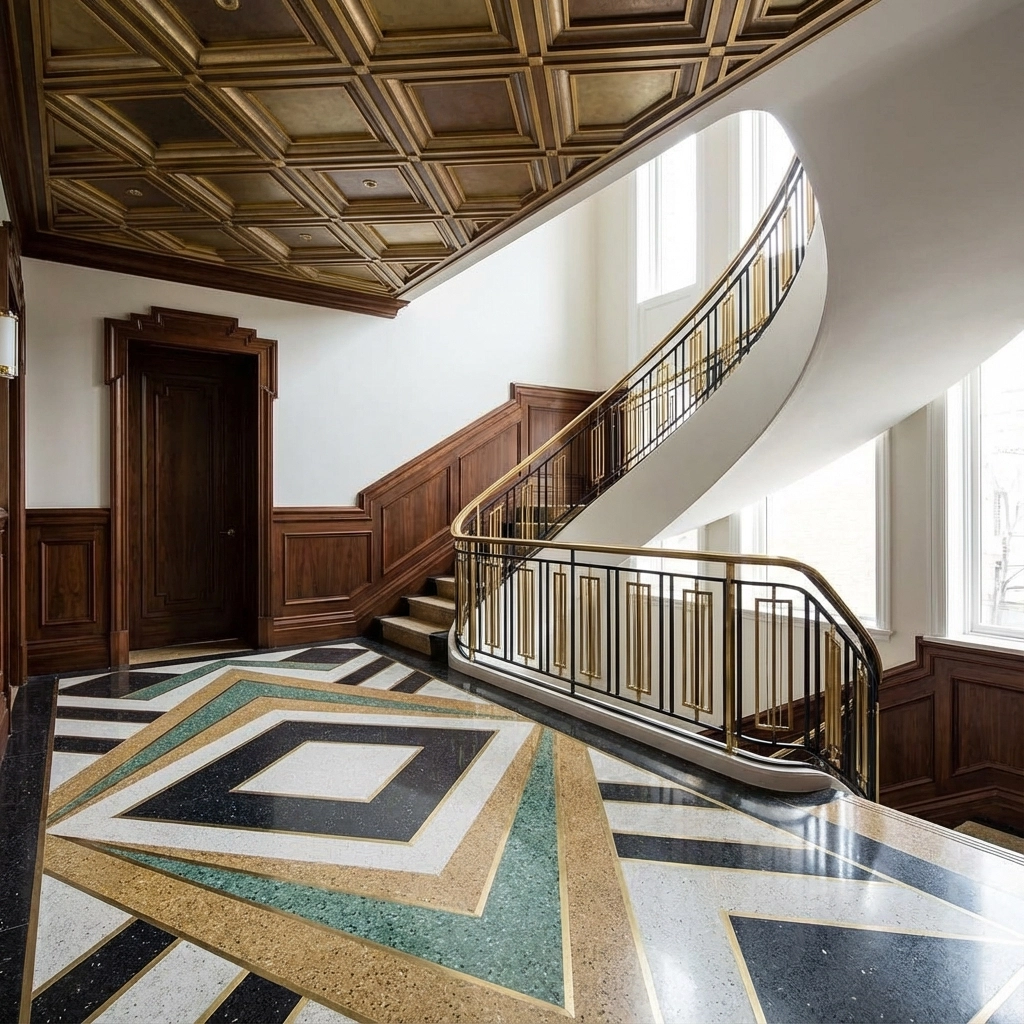
Your flooring choices can establish an Art Deco mood more powerfully than any other single element. Consider terrazzo floors with metal inlays or geometric tile patterns that reference the grand public buildings of the 1920s and 30s. These bold foundation choices give you the confidence to layer softer, more contemporary elements throughout the rest of your space.
If a complete flooring renovation isn't in your plans, area rugs with geometric patterns or metallic threading can achieve similar visual impact while protecting your investment in existing floors.
Blend Vintage Character with Modern Comfort
The most successful Art Deco revivals don't rely entirely on reproduction pieces. Instead, you can combine carefully chosen vintage elements with sleek contemporary furniture to create conversations between eras. A Bauhaus-inspired armchair might sit perfectly beside a custom banquette with clean, modern lines.
This approach prevents your space from feeling like a period room while honoring the craftsmanship and design innovation that made Art Deco legendary. You're curating rather than replicating, creating a space that feels personal and authentic to your contemporary lifestyle.
Design with Defined Spaces and Purpose
Move away from the open-concept uniformity that has dominated recent years. Art Deco encourages you to create defined rooms with distinct moods and purposes. This doesn't mean building walls: it means using furniture placement, color changes, and lighting to establish clear zones within your home.
Each area can express different facets of the Art Deco aesthetic. Your dining room might emphasize geometric patterns and metallic accents, while your living room balances these elements with curved forms and warmer textures. For intimate dining, a 40 inch round table seats four comfortably; allow 36–42 inches of clearance around it so chairs glide with ease, and center a 20–26 inch pendant 30–36 inches above the tabletop.
Balance Geometry with Organic Curves
While Art Deco is famous for its angular precision, the most livable interpretations incorporate curved elements that soften the geometric intensity. Kidney-shaped coffee tables, rounded sectional seating, or sculptural accessories with organic forms prevent your space from feeling too rigid or museum-like.
These curved pieces serve as visual relief while maintaining the sophistication that drew you to Art Deco in the first place. You're creating a space that celebrates both mathematical precision and natural flow.
Curate Statement Lighting and Accessories
Your lighting choices offer perhaps the most immediate way to introduce Art Deco glamour. Period-inspired chandeliers, sconces, and table lamps with geometric metalwork or stepped glass shades can transform the entire atmosphere of your room. These pieces function as both illumination and sculpture, creating focal points that anchor your design scheme.
Don't overlook the power of carefully chosen accessories. Art Deco clocks, mirrors, and decorative objects with characteristic geometric faces and chrome accents add personality without overwhelming your space.
Quick Style Solutions for Instant Impact
- Style a black sideboard: center a large round mirror (30–36 inches), flank with a sculptural lamp pair, and edit accessories to three cohesive textures. Leave negative space so the silhouette shines.
- Elevate with brass and marble coffee tables: size at roughly two-thirds the width of your sofa with 14–18 inches of legroom around. Mix with dark wood and boucle for contrast; seal marble and use felt pads for worry-free luxury.
- Dial in your dining zone: a 40 inch round table is perfect for four; float it on a rug that’s 30 inches wider than the tabletop in both directions so chairs stay fully on the rug.
- When to go custom: odd alcoves, long hallways, or media walls benefit from custom furniture that fits inch-for-inch and hides tech beautifully.
- Make it cohesive: repeat a finish (nickel, brass, ebonized wood) at least three times in every room to tie your designer furniture story together.
Trust Your Instincts and Take Bold Steps
The most important aspect of incorporating Art Deco into your contemporary home is confidence in your choices. This design movement celebrates boldness, craftsmanship, and the belief that your living spaces should reflect your appreciation for beauty and quality.
You don't need to commit to every Art Deco element at once. Start with one statement piece: perhaps a custom furniture piece that captures the movement's geometric elegance: and build your design story from there. Each addition should feel intentional and authentic to your vision of luxury living.
Art Deco's 2025 revival offers you the perfect opportunity to create spaces that are both historically informed and thoroughly contemporary. By blending classic elements with modern sensibilities, you're not just following a trend: you're participating in a timeless celebration of design excellence that will remain relevant for years to come.
The key to success lies in understanding that Art Deco isn't about perfection: it's about passion, craftsmanship, and the confidence to create spaces that truly reflect your sophisticated taste. Whether you choose to make subtle nods to the movement or embrace its full dramatic potential, you're investing in a design philosophy that celebrates the intersection of luxury and livability.

